VeeKenya
In the heart of Ilbisil, Kajiado County, stands a small public school with named—Vee Osiligi Primary School. The name “Osiligi,” meaning hope, is both a prayer and a promise. Serving around 200 young children from PP1 to Grade 3, this community school is where resilience and hardship meet head-on each day.
Under a scorching sun, and through seasons where rain rarely falls, children walk from distant villages to reach the school. Their journey is perilous—encounters with wild animals are not uncommon. Yet they come, carrying empty stomachs and dreams bigger than their surroundings.
There is no electricity at Vee Osiligi Primary School. Classrooms are dim, and learning stops when the sun sets. A solar power system is urgently needed to light up both the school and the minds within. Water, too, is a daily struggle. With the long-standing drought, the school depends on a small, unreliable tank. A sustainable solution like a borehole would transform not just the school, but the entire community.
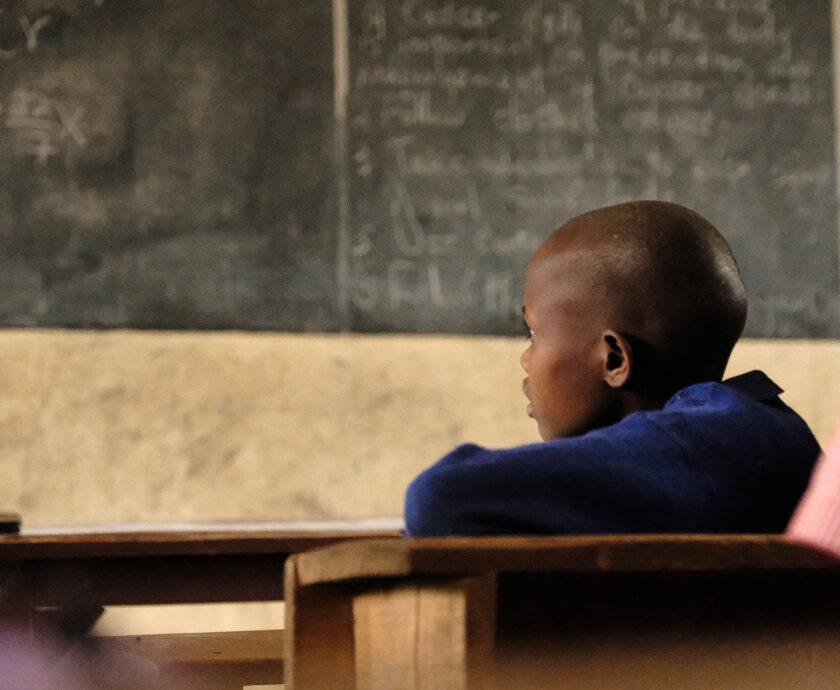
Inside the classrooms, students share torn books. Many wear worn-out clothes or come barefoot. School uniforms would restore dignity and unity. The teachers, passionate but overstretched, do their best with the little they have. More books—storybooks, math sets, atlases—would open worlds beyond the dust that surrounds them.
The lack of rain has not only dried up rivers but also emptied lunch bowls. Children cannot concentrate on empty stomachs. A kitchen and feeding program are essential—not just to nourish, but to keep children in class and out of danger.
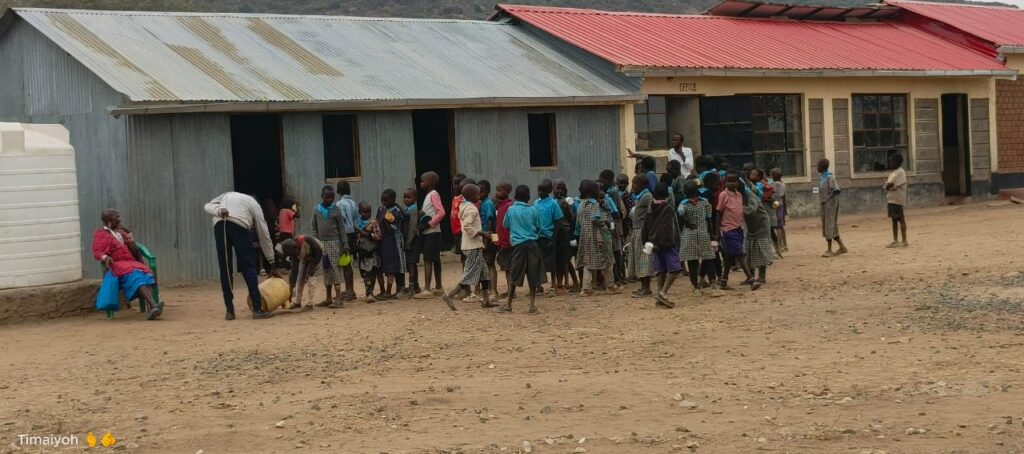
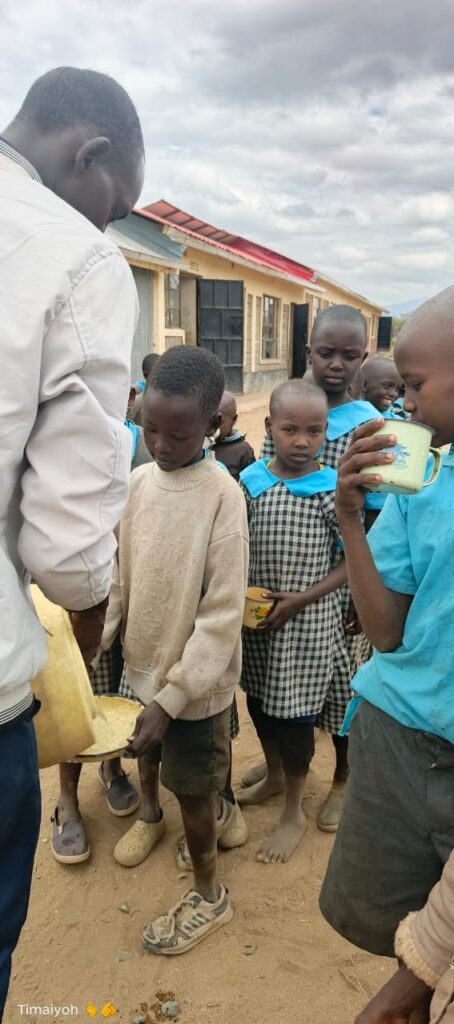
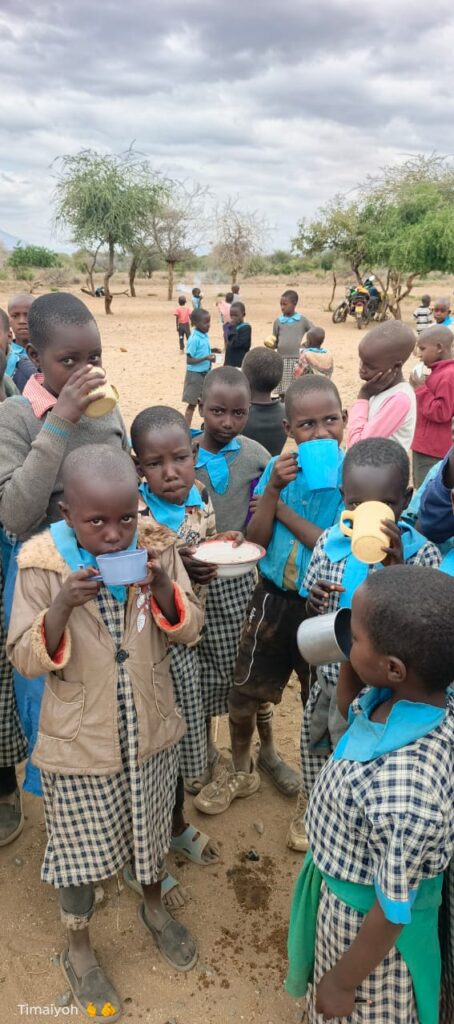
Vee Osiligi Primary School is not just a place of learning. It is a last line of defense against early marriages, child labor, and lost futures. Every resource it lacks tells a story, but every photo captured—children lining up for water, drinking from cups, standing in unity—speaks of potential.
Yet every morning, Osiligi’s children line up with cups in their hands, not just for hydration but for dignity. In the only functioning water tank, a few drops remain, gathered from donations and rationed carefully. In a recent photograph, a line of dusty, smiling, hopeful children waits for their turn. This simple ritual of water has turned into their ceremony of survival.
The school’s teachers are heroes in everyday clothes. Without books, proper classrooms, and often even chalk, they keep going. Each lesson they teach stands against the odds. They cover not just reading and math, but also strength, compassion, and belief. Still, it is clear that they are stretched too thin. Osiligi needs more classrooms, a library filled with stories the children haven’t heard, science kits, pencils, maps, and dreams displayed on the walls.
Many students find themselves at a crossroads. With no nearby secondary school and a long road ahead filled with real dangers—snakes, wild animals, and the increasing pressure to abandon childhood for chores or marriage—the path forward narrows quickly. Some girls are pulled away too soon, traded into early marriages due to poverty. Boys are taken to tend livestock. Both carry dreams that fade with each missed class.
But there is a chance to change this story. A borehole could provide clean, life-saving water not only to the school but also to the entire community. With water would come a school garden, a feeding program, and renewed enrollment. A kitchen could offer food and hope in every spoonful. A small health facility near the school could protect the most vulnerable, preventing children from dying of preventable illnesses.
This is not just a plea; it is an invitation to help shape the next chapter of a story that matters. Osiligi Primary School stands at a fragile point, between its current state and what it could become. With the right support from government agencies, donors, and everyday supporters, we can build more than just structures. We can build futures.
In the heart of Ilbisil, a new story is waiting to be told, one of children who stay in school, drink clean water, read books under a tree that once knew only silence, and dare to dream. Will you help us write it?